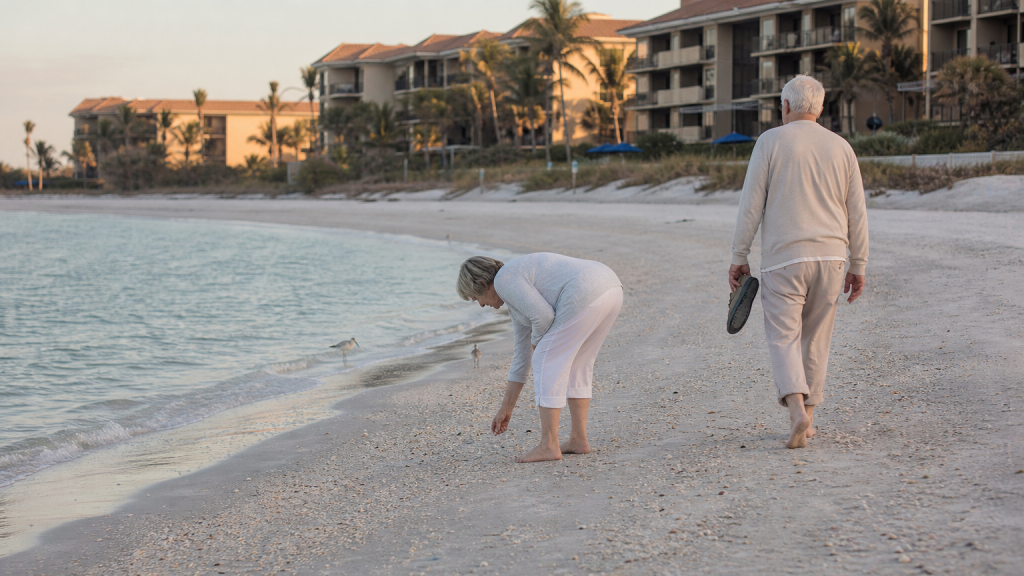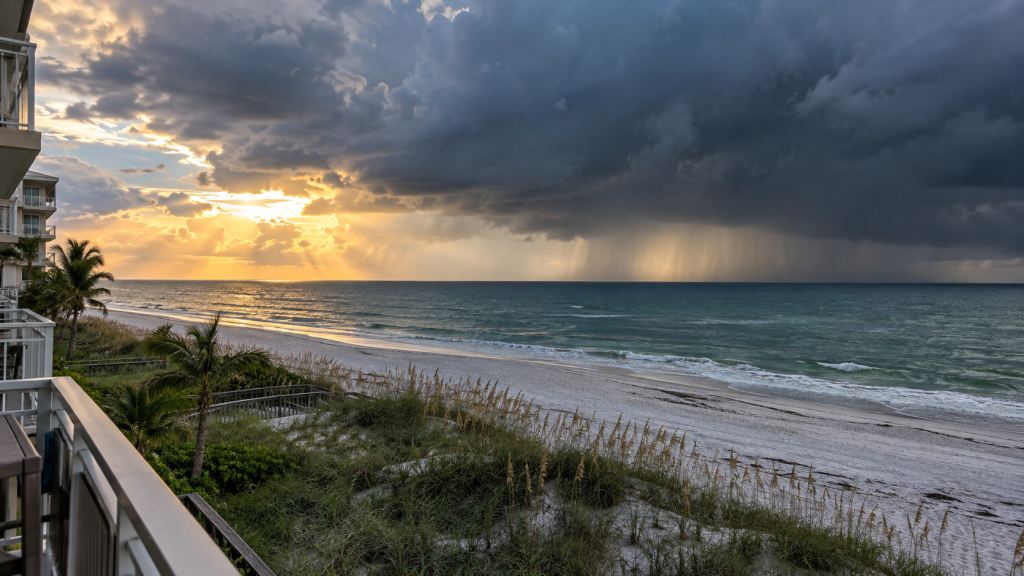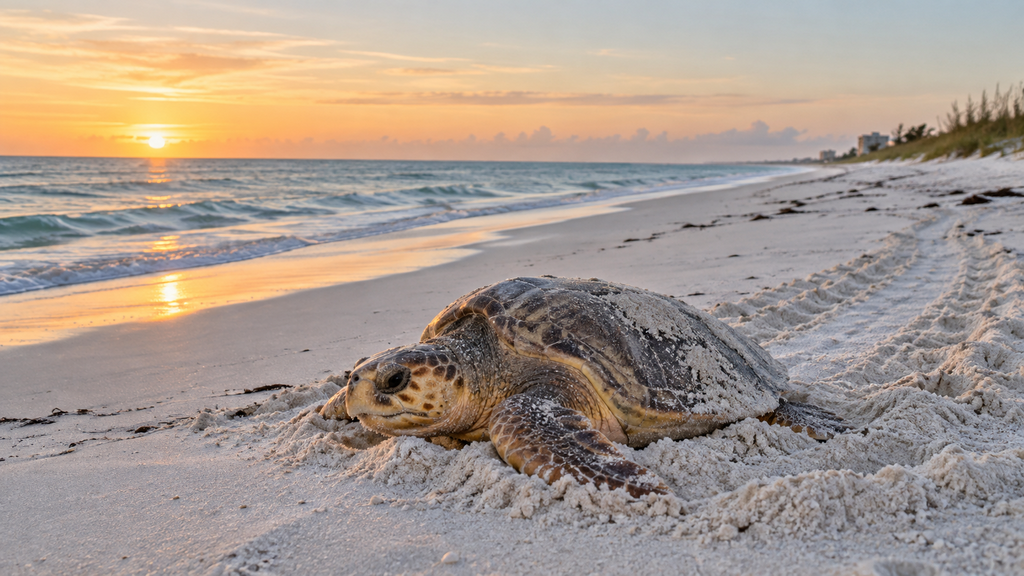
If you’re walking the beach at Sand Cay this summer and spot a little square of stakes and bright tape in the sand, you’ve found a sea turtle nest. From May 1 through October 31, Longboat Key’s beaches are nesting grounds for endangered and threatened sea turtles, mostly loggerheads. Females crawl ashore at night to lay their eggs, and about two months later, the hatchlings dig out and head for the Gulf. It’s one of the quiet wonders of a summer stay here, and a few small habits from our guests make a real difference.
When Is Sea Turtle Nesting Season on Longboat Key?
The Town of Longboat Key observes nesting season from May 1 through October 31 each year. According to Mote Marine Laboratory, which monitors nesting on the local beaches, turtles sometimes start nesting as early as mid-April. Most nests are laid in early summer, and hatchlings emerge through late summer and into the fall.
Why Lights Out Matters So Much
Hatchlings find the water by heading toward the brightest horizon, which on a natural beach is the moonlit Gulf. Porch lights, balcony lights and flashlights pull them the wrong way, toward buildings and roads, where they can die of exhaustion or be caught by predators. Mote calls these “disorientations,” and artificial light is the main cause. Bright lights can also discourage a nesting female from coming ashore at all.
That’s why Longboat Key asks everyone on the beachfront to turn off or shield any light visible from the beach after dark during nesting season.
Six Simple Ways Guests Can Help
- Close the blinds at night. Gulf-facing condos can light up the beach from inside. Drawing the curtains after sunset is the single easiest thing you can do.
- Leave balcony lights off. Enjoy the stars instead. They’re spectacular on a dark beach.
- Skip flashlights and phone lights on the beach at night. If you need light to walk safely, use a red light, which turtles are far less sensitive to, and keep it pointed down.
- Level your sandcastles and fill in holes before you leave the beach. Hatchlings and nesting females can get trapped in holes or blocked by mounds.
- Take everything home at the end of the day. Chairs, umbrellas and toys left on the sand overnight are obstacles for a turtle crawling up the beach.
- Give marked nests plenty of space, and never touch the stakes, the nest or a hatchling.
If You See a Turtle on the Beach
Seeing a nesting female is unforgettable, but keep your distance, stay quiet, and don’t shine any light on her or take flash photos. She can abandon the nest if disturbed. Watch from far back and let her finish.
If you find a sea turtle that’s injured, stranded or clearly in trouble, or hatchlings heading away from the water, don’t pick them up. In Sarasota and Manatee counties, call Mote’s stranding hotline at 888-345-2335. Elsewhere in Florida, call the FWC Wildlife Alert hotline at 1-888-404-3922.
A Few Sea Turtle Facts for the Kids
- Most nests on our beaches are made by loggerheads, named for their big heads and strong jaws.
- A mother turtle lays around 100 eggs per nest, and she may nest several times in one season.
- Eggs incubate for roughly two months in the warm sand.
- Hatchlings usually emerge at night, all at once, and scramble to the water together.
- Only a small fraction of hatchlings survive to adulthood, which is why every one that reaches the Gulf counts.
Enjoy the Beach, Day and Night
Turtle season is also peak season for sunsets. Watch them from your balcony or the sand, then let the beach go dark. For the best spots, see our guide to capturing the best beach views at Sand Cay. From home, you can check the Gulf any time on our live beach camera.
Frequently Asked Questions
When is sea turtle season on Longboat Key?
Nesting season runs from May 1 through October 31, though some turtles begin nesting as early as mid-April.
Can I see sea turtles hatch at Sand Cay?
Sometimes, but hatchlings emerge at night and on their own schedule, so sightings can’t be planned. If you’re lucky enough to see them, keep your distance and don’t use any lights.
Why do I need to turn off lights on the beach?
Artificial light confuses hatchlings, which follow the brightest horizon to find the water. Lights visible from the beach can lead them away from the Gulf.
Who do I call about a turtle in trouble?
In Sarasota and Manatee counties, call Mote Marine Laboratory at 888-345-2335. Elsewhere in Florida, call the FWC Wildlife Alert hotline at 1-888-404-3922.
Want to experience summer on the Gulf? See our beachfront condos and summer rates, or call (800) 843-4459 ext. 102.